“The Jury was rigged. The case was closed before we arrived.” – Ru
Feminine wisdom. Emotional intelligence. Trusting my intuition. These phrases circulate so quickly now that they can begin to lose their edges. I have tried many times to make myself legible to a world that could not always read me. But legibility and authenticity are not the same thing.
I have watched qualities such as emotional sensitivity, intuition, receptivity, embodiment, and relational awareness get sentimentalized in one room and dismissed in another. A woman who laughs too loudly or occupies herself too freely can still be read as attention-seeking before she is read as intelligent. And the feminine itself is often offered only two costumes: lethal enchantress or sweet, harmless bloom.
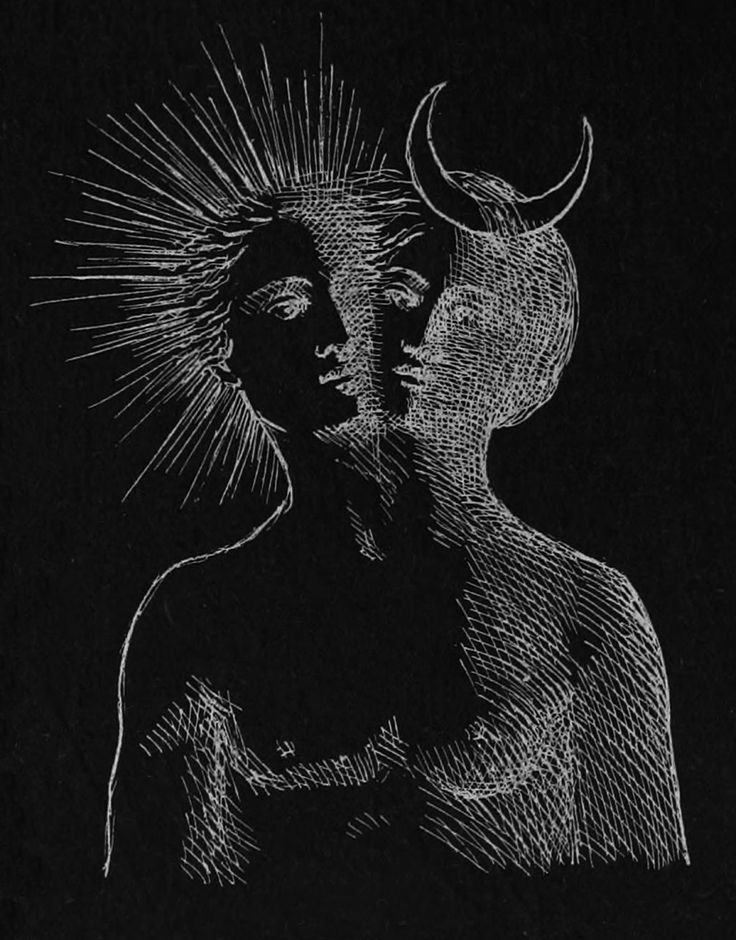
I have never fitted either cleanly. I have always experienced two figures within myself: one dark, one radiant, neither willing to surrender the room to the other.
Within Liminal Lessons, “feminine” and “masculine,” when used archetypally, name symbolic modes of being rather than fixed traits of women and men. They are metaphors for qualities and patterns, not biological or psychological laws. What follows is therefore partly history and partly symbolic interpretation. I will keep those two things visibly distinct.
The Two Sides of Feminine Intelligence Within Me
One is dark: the Mafia Matriarch, as I call her. She appears when the world has had too much of me, or I of it. Born in my imagination from dark goddesses who refused to kneel, she is the one with whom I do not negotiate when loyalty to myself is required. She is not cruel. Just honest.
The other is Radiant Ru. I see myself laughing in the sun, hair bouncy and curly, wild and untamable as wind. She is alive when I lean into the whispers of the world, when I deliberately notice goodness and harmony around me. She is not naïve. Just generous.
Neither is more powerful. Neither is more real. If one harnesses her force from nights and the moon, the other harnesses hers from sunlight and the life in living things. They both keep me in balance. (Very Gemini. Very me.)
The two sides were never the problem. The demand that I explain one as a wound and dismiss the other as performance was. I was being asked to choose whichever version made me easier to read, easier to contain, easier to accommodate in rooms I was already making too bright.
It was a realization that became clear to me recently. That these two aren’t as separate as I deem them to be. They are two sides of the same coin.


The coin is named feminine Wisdom.
As this hit me, the world and I disagreed, as we often do. It had already been decided that logic was linear. Reason is directional. Intelligence is precise, and precision, apparently, has a gender: a purely masculine domain.
The case was made, and the evidence became hard facts. The masculine passed down the verdict before any of us arrived to dispute it. With the case closed centuries ago, we inherited the ruling as we inherit a language. Never once thinking of whether there was ever another tongue, or questioning whether the jury was rigged.
It was rigged
Older wisdoms had something else to say. Pre-patriarchy spoke in an ancient voice, which put the feminine at the seat of wisdom. They didn’t just include the feminine in the realm of the mind; they placed her at its origin.
They saw intelligence as a living thing. Breathing, ever-growing, perceiving invisible patterns. C. G. Jung gave intuition a specific place within his psychological typology. In Psychological Types, he described intuition as a form of unconscious perception especially attuned to possibilities, relations, and conditions that may not be apprehended through ordinary conscious reasoning alone. That does not make intuition infallible; even Jung describes it as a psychological function, not supernatural certainty.
That distinction matters to me. Sometimes understanding arrives first as a pattern, image, bodily reaction, or felt “yes” before I can explain why. The feeling may contain information. It may also contain projection, fear, memory, desire, or error. Feminine wisdom, as I use the term, begins by listening to the signal without prematurely crowning it truth

The feminine intelligence is the primary intelligence of the cosmos. Not emotion as opposed to intellect. Not intuition as a consolation prize for those barred from reason.
But the mind itself, in its deepest and most original form, has the traits we ascribe to the feminine.
What was suppressed was not merely feelings, but the knowledge that feeling is a form of intelligence. Perhaps the most sovereign one ever known.
I know this to be true as I know my own name. My deepest understandings have been birthed from resonance. A feeling within my chest that says ‘yes, that’s it‘ before my mind has caught up with the reasoning. I called it intuition, but the ancient wisdoms called it something far older to name.
Where Emotional Intelligence Fits
Emotional intelligence is not another name for feminine intuition. In psychology, it refers broadly to abilities involved in perceiving, understanding, using, and regulating emotional information. Mayer and Salovey’s influential model treats emotion not as the enemy of thought but as information that can participate in reasoning. Nothing in that definition makes emotional intelligence inherently female or feminine.
I place it beside feminine wisdom for a different reason. It gives modern psychological language to one part of what interests me here: feeling can carry information. But emotional intelligence also requires interpretation and regulation, not simply obeying whatever feeling arrives first.
That is where the House departs from the internet version of “trust your intuition.” Listen, yes. Investigate, also.

Across very different traditions, feminine figures have sometimes been associated with wisdom, speech, fertility, intuition, sacred power, inspiration, or revelation. Their meanings are not identical. I place them beside one another here as a symbolic constellation, not as evidence of a single uninterrupted historical doctrine.
First, the history. Then, where useful, I will tell you what I see in it.
Greek Traditions & Feminine Wisdom
The Greeks sang of something similar in the myths, encoding truth. Metis, from Greek mythology, was the first wife of Zeus and the mother of Athena. Her name itself means cunning-intelligence, craft-knowing. The kind of intelligence that adapts, sees around corners, and reads the room. The myth portrays it as Zeus’s triumph. The masculine swallowing Metis, the feminine, later giving birth to Athena, the Goddess of wisdom.
However, read the bones of it, and you find the oldest theft in the Western tradition. How the patriarchy absorbed the feminine intellect whole. Renamed and made it appear as if it emerged from the masculine. If you have ever had your ideas taken, renamed, or rerouted through someone else’s mouth before they were allowed to count, you have felt the pangs of pain Metis felt. You have felt what Metis felt inside the belly of the king.

The Kabbalists encoded the same knowing into the very architecture of existence. At the summit of the Tree of Life, we find Kether (Crown), Chokmah (Wisdom), and Binah (Understanding).
Chokmah is the flash of divine knowing. Pure. Undifferentiated, masculine in polarity. Binah is where this flash transforms into something that can be understood and grasped. It is the womb where pure formless knowing is shaped into thinkable and organizable intelligence. She is feminine in polarity. Without Binah, Chokmah remains a flash of lightning that passes and leaves nothing behind.
Our feminine bodies, our womb, the cycle, the interior knowing, are sites of intelligence, rather than the wound risen from the First sin, as we are made to believe. They are Binah. They are where the formless becomes form.
Vedic Traditions, Shakti & Kundalini
The Vedic traditions sang about it through Saraswati, the Goddess of Vak. Wisdom, the logos, divine speech. She is not only the face of intelligence, but she also shows that the highest form of intelligence is creative in nature. Her images show her holding the veena, a musical instrument, and she holds the Vedas, the oldest recorded wisdom texts. She sits on a swan, a symbol of discernment, as it can separate milk from water, essence from appearance.
She shows us something the modern world has spent years unlearning. The mind that truly knows is a mind that can make. Transform understanding into form, into word, into music, into poetry.
She is the antidote to information.
If you have ever felt that creativity and art are signs of high intelligence rather than a charming distraction, you have always understood what Saraswati knows all along.

Shakti & Tantric Traditions
Shakti, in the Tantric traditions, is the deepest inversion of the patriarchal mind-body split. Shiva, the masculine principle, is unchanging pure consciousness. And yet, without Shakti, Shiva is a corpse. The animating intelligence of the cosmos is feminine. She is why anything moves at all.
Kundalini, the coiled serpent energy, lies dormant at the base of the spine. It is inherently feminine. The Goddess herself is in a dormant state within each of us. Kundalini yoga is the awakening of the feminine intuition and wisdom within the body. Allowing her to rise through the chakras to unite with Shiva at the crown. Their union is enlightenment. It is the feminine that moves. She rises. Does the work. Pierces every obstruction.
If you have ever stood a little taller and felt confidence rise through you like heat. Know that it is Shakti. Waiting. Coiled. Entirely yours.
Celtics and Their Version of the Wisdom within
In Welsh tradition, the story of Ceridwen tells of a cauldron containing awen and knowledge, brewed for a year and a day. Gwion Bach accidentally receives the transformative drops, setting off the shape-shifting chase that ultimately leads into the Taliesin story.
The historical myth does not declare “cosmic intelligence is a feminine brew and the masculine receives it by accident.” That delicious sentence is mine.
But I still love the image: a woman tending a cauldron of inspiration for a year and a day, knowledge requiring heat, time, patience, accident, transformation. Intelligence brewed rather than merely downloaded.
Other traditions offer very different figures associated with prophecy, spiritual insight, inspiration, or transformative knowledge: the Pythia at Delphi in ancient Greek religion, the völva of Norse tradition, and the complex female or feminine figures called dakinis in Tibetan Buddhist traditions. I mention them only as further points in the symbolic constellation. They are not versions of one archetype wearing different costumes, and each deserves its own religious and historical context.
How Did the Suppression of Feminine Intelligence Happen?
There is no single historical afternoon on which “feminine wisdom” was overthrown. Property systems, inheritance, warfare, religious institutions, law, kinship, philosophy, colonialism, labor, medicine, and gender changed differently across cultures and centuries.
Archaeologist Marija Gimbutas famously proposed a female-centered or “matristic” Old Europe whose cultures were transformed by migrations from steppe societies associated with her Kurgan model. Her work on Indo-European migrations was enormously influential, and later ancient-DNA research has renewed parts of the migration discussion. Her broader reconstruction of peaceful, goddess-oriented Old Europe, however, remains debated among archaeologists. It should be presented as an influential interpretation, not settled prehistory.
I can still tell you what that interpretation means to me. The image of a vessel displaced by a blade, immanence displaced by transcendence, earth displaced by sky, is symbolically powerful. But I will call it symbolism when that is what I am doing.
Western philosophy does contain a long and consequential history of mind/body hierarchy, and feminist philosophers have shown how body, nature, emotion, and femininity were often grouped while reason, mind, and masculinity occupied the supposedly higher side of the opposition. That history matters.
But the Enlightenment was not one voice declaring emotion illegal. Rationalism, empiricism, scientific inquiry, secular humanism, and political thought developed through arguments with one another, not from a single manifesto. Cartesian ideas about the sex-neutral rational mind were even used by seventeenth-century thinkers to argue for women’s intellectual equality and education.
So I do not want less reason, less science, or less evidence. I want a wider intellectual ecology in which measurable evidence does not require us to pretend that emotion, embodiment, imagination, relationship, and lived experience contain no information at all.
The answer to an impoverished definition of reason is not an impoverished definition of intuition.
Witch Hunts, Gender, and the Seduction of a Simple Story
The European witch hunts were profoundly gendered: women made up the majority of those prosecuted in many regions, though men were also accused and local patterns varied considerably. Misogyny, religious conflict, community tensions, law, poverty, reputation, and changing social structures all belong to the history.
A popular modern story says that the women killed as witches were essentially an underground class of herbalists, midwives, and suppressed tradition-keepers. That story is emotionally powerful, but historians have repeatedly challenged it. Midwives were not the principal targets of European witch trials, and evidence does not support treating the hunts as a straightforward extermination of female healers.
Silvia Federici offers an influential feminist interpretation linking witch persecution with capitalism, reproductive control, land, labor, and the disciplining of women’s bodies. I find parts of that analysis deeply provocative. But it is an interpretation within a contested historiography, not the only scholarly account of why the hunts occurred.
The horror does not become smaller when the mythology becomes more precise. Real women and men were accused, tortured, imprisoned, exiled, and killed. History is terrible enough without requiring us to invent a cleaner tragedy.

“The witch-hunt was… an attack on female knowledge and the power that came with it.” — Silvia Federici.
Why Feminine Intelligence Still Matters to Me
So what survives after the history is disentangled from my symbolism? Quite a lot.
Feminine wisdom, as I use the term, is not the opposite of masculine reason, and it is not the primordial substance from which all reason historically emerged. It is my name for capacities that can disappear from view when intelligence is reduced to detached analysis alone: emotional information, context, relationship, imagination, bodily sensation, pattern recognition, creativity, ambiguity, and the ability to hold two truths in tension long enough to understand why both exist.
These capacities can mislead us. So can reasoning or memory. So can data interpreted badly. The answer is not to crown a new sovereign. It is integration.
Feeling becomes information. Reason interrogates it. The body contributes signals. Context interprets them. Imagination proposes possibilities. Evidence eliminates some. Wisdom, if we are fortunate, emerges from the conversation.
Practicing Feminine Intelligence Every Day
It makes room for the image before interpretation, the feeling before explanation, the dream before we decide what the dream means. These may be languages of inner life. They are not automatically verdicts about external reality.
A dream can be psychologically meaningful without being prophecy. A bodily sensation can deserve attention without being infallible intuition. A feeling can be true as a feeling while its explanation remains wrong.
I stopped choosing between the Mafia Matriarch and Radiant Ru, not because I found a way to smooth them into something consumable. But because I finally understood that the demand to choose was never mine to fulfil. The integration was anything but peaceful. Two opposites recognizing each other for the first time. Moon and the Sun. Dark and the Light. The intelligence that descends and the wisdom that illuminates. It seeks through your body; it caresses you through your dreams.
For me, intellect and feminine wisdom are not enemies reluctantly negotiating a treaty. They are capacities I want brought back into conversation. Analysis without felt life becomes thin. Feeling without discernment becomes easy to deceive.
The work is not to return to some perfectly integrated ancient past. It is to become more integrated now.
It’s always available within us all. However, it’s simply waiting for us to tune in and take its hand once again.
Not reverently.
Recognizingly.

The Liminalist Practice: Return To Your Knowing
You may have noticed more than you allowed yourself to examine. This practice is not about proving that every instinct was secretly correct. It is about learning to hear a signal before deciding what the signal means.
Feminine Wisdom in Practice (5 Minutes)
Sit somewhere quiet. Place both hands somewhere sensation is easy for you to notice: lower belly, ribs, chest, thighs, or simply your lap. Close your eyes if that feels comfortable.
Think of one thing you have been calling “just a feeling,” “not logical enough,” an instinct, an impulse, or a pull you have been overriding.
Do not obey it. Do not dismiss it. Investigate it.
Ask: Where do I feel this in my body? What emotion is present? What story am I telling about the sensation? What evidence supports that story? What evidence complicates it?
Give yourself two minutes. Let sensation be sensation before turning it into prophecy.
If Binah or Shakti are meaningful symbols to you, you may let them accompany the practice imaginatively. But warmth is also simply warmth. The symbol is an invitation, not a diagnosis.
The Seven-Day Body Wisdom Log
| Field | Write |
|---|---|
| Signal | What sensation, emotion, image, or intuition appeared? |
| Interpretation | What did I initially think it meant? |
| Evidence | What facts support or challenge that interpretation? |
| Outcome | What became clearer later? |
At the end of seven days, look for patterns. You may find one. Or you might discover that certain sensations reliably precede particular needs. You may also discover that anxiety sometimes dresses itself as intuition, or desire as certainty. Both discoveries are useful.
Discernment is not learning to obey the body over the mind. It is learning how body, emotion, thought, context, memory, and evidence speak to one another.
Your Invocation
I do not exile what arrives before language.
I listen before I conclude.
I honor feeling without mistaking it for proof.
I let reason and resonance meet.
Sophia may be my mirror. Shakti may be my symbol.
But the knowing I trust is the knowing willing to be examined.
Your Next Threshold
★ If intelligence can live not only in analysis but also in emotion, relationship, sensation, imagination, and perception, the question is not which faculty deserves the throne. It is which forms of information you have learned to distrust, and which ones you have learned to obey without examination → Continue into Feminine Essence
Or take the Liminal Self-Audit (Especially if you are beginning to question which parts of yourself are genuinely yours and which were trained into silence)