
“Let the light in.”
Welcome to a space of spirituality and mysticism for beginners, where poetry and philosophy meet contemplative practice and traditions of the sacred. This chamber follows my own spiritual inquiry while opening a door for anyone beginning theirs. Enter slowly. Bring curiosity. Let mystery remain mystery long enough to be examined.
I have been drawn to the shimmering edge between awe and fear for as long as I can remember: thunder, symbolic stories, silence, strange moments of recognition. I often experienced ordinary life as though something deeper might be moving beneath its surface. Whether that feeling was spiritual, psychological, symbolic, or some mixture of all three became part of the question rather than an answer I wanted to assume.

In a world that moves fast and often forgets how to breathe, spirituality becomes a pause. A chance to remember who we are beyond roles and routines.
Mysticism deepens that pause by asking what, if anything, lies beyond ordinary perception and how people across traditions have interpreted experiences of the sacred, unity, presence, emptiness, or transcendence.
Spirituality and mysticism can:
- place the individual life in conversation with traditions, communities, symbols, and larger questions of meaning.
- create space for questions that practical life does not always answer;
- cultivate attention, wonder, contemplation, and ritual;
- offer languages for experiences that feel sacred or difficult to explain;
“I wish I could show you, when you are lonely or in darkness, the astonishing light of your own being.”
– Daniel Ladinsky, I Heard God Laughing: Renderings of Hafiz
The Difference Between Spirituality and Mysticism
Across cultures and traditions, human beings have repeatedly returned to questions of identity, meaning, suffering, death, belonging, and whatever may lie beyond ordinary experience.
Spirituality and mysticism are two languages through which some people approach those questions.
As I use the word here, spirituality names a search for meaning, sacredness, relationship, or inner orientation beyond the immediately practical. It may unfold within religion, alongside it, or outside formal religious belonging.
At its core, spirituality is about seeking connection beyond the surface of life. It is not confined to religion, though it is one of its vessels.
Spirituality does not require certainty. Often it begins with the willingness to remain inside a question without immediately forcing an answer.

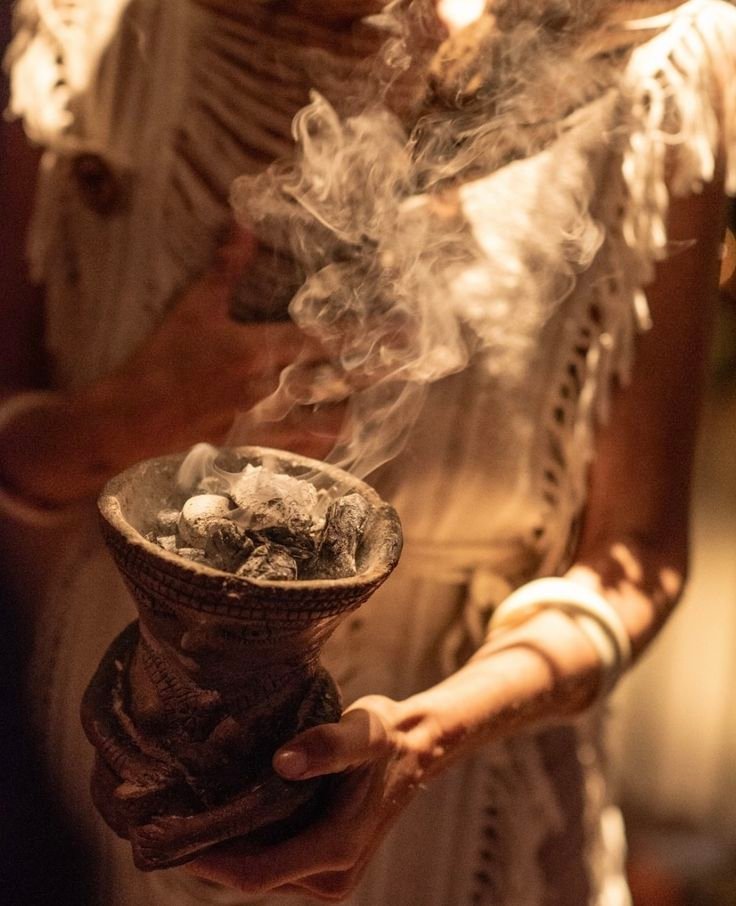
Mysticism is narrower and stranger to define. It includes traditions, practices, texts, and experiences concerned with forms of transformation or encounter that are understood as exceeding ordinary modes of perception.
In the quiet of dawn, it shows us beginnings. In the chaos of the marketplace, it whispers balance. In heartbreak, it reveals the alchemy of longing. In joy, it teaches us that gratitude is itself a prayer.
It is the direct, lived experience of union with the Divine, the Absolute, or the ultimate Reality.
Some mystical traditions speak of union with God or ultimate Reality. Others speak of emptiness, nonduality, direct awareness, divine presence, or forms of knowing that resist ordinary categories. Their claims are not identical, even when their language sometimes rhymes.
Spirituality and mysticism overlap, but they are not interchangeable. Someone may understand a mystical experience religiously, spiritually, philosophically, or even through a secular framework. What matters here is not forcing every encounter into one explanation, but learning how different traditions have understood it.
“The eye with which I see God is the same eye with which God sees me.”
— Meister Eckhart (Christian Mystic) Sermon 57
Why Spirituality and Mysticism Matter Today
In an age of speed, information, and constant explanation, spiritual and mystical traditions offer another kind of attention. They ask questions of depth, meaning, mortality, belonging, and mystery that productivity and success cannot answer on their own.
They do not make grief, conflict, loneliness, or uncertainty disappear. At their best, they give us practices and languages through which those experiences can be approached differently.
Mystical traditions have variously sought stillness within chaos, wholeness amid fragmentation, devotion in uncertainty, and ways of meeting suffering without reducing life to suffering alone. Whether those practices reveal an ultimate Reality, transform perception, or both is interpreted differently across traditions.
Mystery does not make life less real. It asks us to look at reality with greater attention.
This chamber gathers my explorations into spiritual practice, mystical traditions, contemplative life, symbolic language, and the ways human beings have approached what they regard as sacred. Traditions may echo one another here without being collapsed into one doctrine.
You do not need to unlearn everything before entering. Begin with one practice, one question, one text, one tradition named carefully. The path may spiral, circle, and return, but it need not blur its sources.
Begin with Spiritual Journey

Remain in the House
⚝ To return to Liminal Lifestyle.
⚝ Read “Intrusive Thoughts: The Tongue of Thought” in The Echo Series.