A school of rediscovering, becoming, and being.

What Is RUIA?
RUIA moves through Six Gateways of being across six developmental Stages, returning to the body, mind, emotions, spiritual life, creativity, and relationships with a different depth of inquiry at each passage.
This is not passive learning. It asks for active participation.
Its intellectual and practical lineage draws from philosophy, psychology, embodiment, mythology, symbolic inquiry, and contemplative and mystical traditions.
The Architecture of RUIA
RUIA: Re-Awaken Your Inner Archē is a six-stage curriculum of inner study, moving through Six Gateways of being: Physical, Mental, Emotional, Spiritual, Creative, and Relational.
Its intellectual and practical influences include philosophy, psychology, embodiment, mythology, symbolic inquiry, creative practice, and contemplative and mystical traditions. Rather than relying on passive intake alone, RUIA asks the student to observe, practice, experiment, record, and return.
Physical · Mental · Emotional · Spiritual · Creative · Relational
These Gateways are not separate compartments of the self. They are interdependent territories. What happens in the Mind may surface in the Body. What changes in the Soul may alter our Connections. Unresolved internal things eventually appear in what we create. RUIA does not ask us to perfect these Gateways. It asks us to become conscious of how we inhabit them, how they influence one another, and where they have fallen out of coherence.
Across the Six Gateways stand Six Stages of cultivation.
Awareness · Understanding · Regulation · Integration · Embodiment · Expression
The curriculum unfolds through Six Stages. The curriculum unfolds through Six Stages. Each Stage carries a distinct developmental task through all Six Gateways.
To put it simply:
The Gateways tell us where to look.
The Stages tell us where we are in the journey.
Together, they form the 6×6 framework of RUIA.
“One does not become enlightened by imagining figures of light, but by making the darkness conscious.”
—C. G. Jung, Alchemical Studies, CW 13, §335
The Six Gateways of RUIA
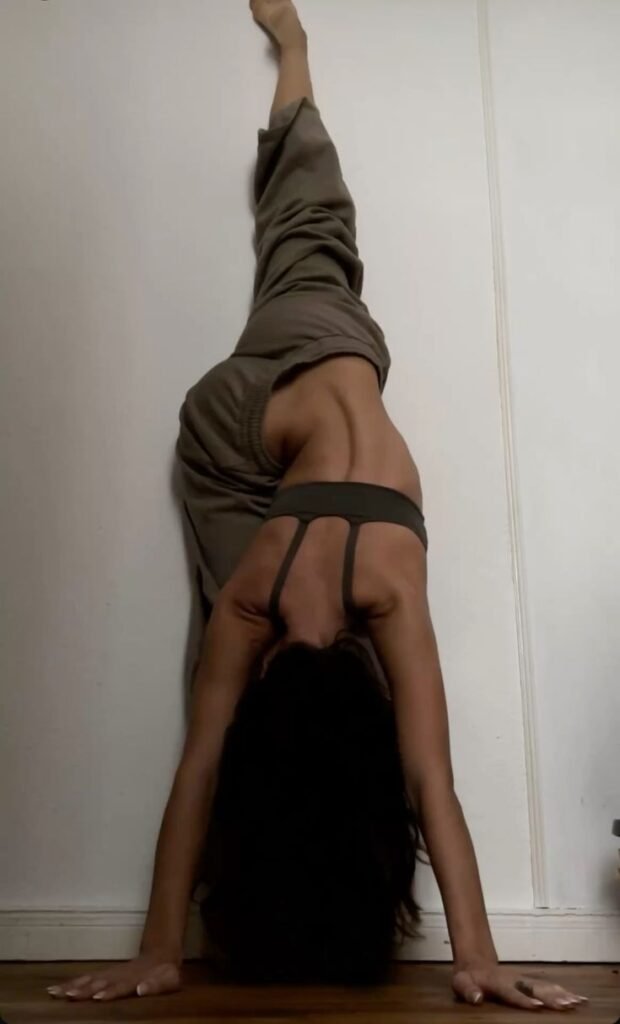
Physical: The Gateway of the Body
The body is the first foundation stone.
The place where spirit becomes visible. Where thought becomes muscle. Where emotion learns to breathe through the body.
This Gateway restores conscious embodiment.
Here, we learn to inhabit the body with dignity, awareness, rhythm, and care.
Here, we learn to inhabit the body with dignity, awareness, rhythm, and care: to notice its signals and examine how identity, emotion, stress, habit, and personal history shape our experience of physical life.
This Gateway asks:
Do you truly inhabit your body, or merely carry it through your life?
Mental: The Gateway of the Mind
The mind is powerful, but unchecked assumptions can distort perception. This Gateway is devoted to discernment, reflection, and intellectual refinement.
Not merely learning what to think, but learning how to examine thought itself.
RUIA does not glorify intelligence alone. It questions assumptions, recognizes bias, and sharpens clarity without losing humility.
This Gateway asks:
Can you refine the lens through which you see reality?

Emotional: The Gateway of Emotions
Emotions are not obstacles to transcend. They are languages to become fluent in.
This Gateway develops emotional awareness without captivity: the capacity to feel deeply without allowing every feeling to become a command, and to recognize patterns beneath reaction.
Here, feelings are observed, contextualized, and brought into relationship with choice.
This Gateway asks:
Can you feel deeply without allowing every feeling to become a command?
Spiritual: The Gateway of the Soul
The Spiritual Gateway asks what remains when personality, performance, role, and identity no longer provide sufficient orientation.
The Gateway of the Soul is not about religious dogma, rituals, or moral superiority.
Here, you explore meaning and inner direction. You contemplate values and questions that many avoid asking.
Without some form of inner orientation, development can become scattered: growth pursued without a clear sense of what it is actually for.
The Soul Gateway exists to restore direction. That inner center that keeps everything about us aligned.
This Gateway asks:
What anchors your existence when external identities fall away?

Creative: The Gateway of Creation
In the architecture of RUIA, the Gateway of Creation is not limited to art.
Creativity here means giving form to what exists within: through language, work, choices, art, contribution, environments, projects, and the visible shape of a life.
RUIA does not treat creativity as mere decoration, but as one place where inner integration can become visible.
This Gateway asks:
What are you creating with the life you have been given?
Relational: The Gateway of Connections
Human beings are shaped in relationships. We are shaped in relationship, and fractures in connection can become profound sources of suffering.
This Gateway explores the art of meeting others without abandoning oneself.
This is where much of our inner work encounters another human being. Here, what we have observed across the other Gateways is tested in relationship: in boundaries, intimacy, conflict, communication, belonging, and the ways we remain ourselves while meeting another.
This Gateway asks:
How do you love, speak, and connect without abandoning your center?

The Six Stages of RUIA
The Six Gateways locate what is being examined; the Six Stages shape how each Gateway is explored.
Stage I · Awareness
To see what is actually there.
Before change comes observation. Awareness teaches us to notice patterns, reactions, contradictions, habits, inherited assumptions, desires, signals, and absences without immediately trying to repair them.
Stage II · Understanding
To understand what we have seen.
Observation becomes interpretation. We begin tracing origins, relationships, meanings, causes, repetitions, and the deeper structures beneath what Awareness revealed.
Stage III · Regulation
To remain present without being ruled by what arises.
Insight alone cannot create coherence. Regulation develops the ability to work with inner states without suppression, impulsive reaction, or unnecessary self-abandonment.
Stage IV · Integration
To allow what we have learned to alter the whole.
Contradictions are brought into relationship. Knowledge begins crossing between Gateways rather than remaining isolated inside them.
Stage V · Embodiment
To live what we claim to understand.
Values, boundaries, rhythms, beliefs, and insights are tested in ordinary life. The work becomes behavior rather than theory.
Stage VI · Expression
To give coherent inner life an outer form.
What has been cultivated begins to speak through choice, relationship, work, creation, contribution, voice, and the shape of one’s life.
The Stages are cumulative rather than disposable. Awareness does not disappear when Understanding begins. Regulation does not replace Awareness. Each later Stage depends upon and deepens the capacities developed before it.
“Knowledge without action is madness, and action without knowledge is useless.”
—Al-Ghazali, Ayyuha al-Walad (A Letter to a Beloved Student)
How the Curriculum Unfolds
RUIA is a 6×6 curriculum: six Gateways of being explored through six developmental Stages.
Stage I: Awareness carries the work of Awareness through all Six Gateways.
Stage II: Understanding returns to those same Gateways through a deeper interpretive lens.
The process continues through Regulation, Integration, Embodiment, and finally Expression.
The Gateways remain. The depth and task with which you enter them change.
RUIA Is Not Self-Help
“Leave behind the desire to be seen. Bring only the willingness to see.”
Begin With Awareness
Join the RUIA Founding List
Not ready for the school yet? Take the Liminal Self-Audit.