
The Marrow (Synopsis)
Parents, culture, institutions, relationships, and experience shape many of the beliefs through which we interpret ourselves and the world. Because these influences are absorbed gradually, an inherited assumption can eventually feel indistinguishable from a consciously chosen conviction.
The work is not to purge everything learned from others. It is to examine provenance: Where did this belief come from? Have I ever questioned it? Would I choose it now? Awareness begins by creating enough distance between the thinker and the thought to ask those questions without immediately defending the answer.
“The moment I closed my eyes, my mind opened its own.”
A statement from my field notes inside the Body Gateway. I thought it was a new self-discovery. But I would later find out it was actually a warning about my inherited beliefs and what I thought was mine.
Four weeks in the Body Gateway have shown me how often I observed my body without inhabiting it. Now, the Mind Gateway had a colder gift waiting for me.
It started as a strange possibility: I had been inhabiting beliefs and thoughts I had never examined. I had been living for years inside sentences I did not write. My thoughts, ideas, expectations, dislikes, even portions of the life I had built around them, and I had rarely stopped to question their origins.
If you’ve read ‘Intrusive Thoughts: The Tongue of Thought,’ you already know one of the habits Awareness asks us to cultivate: the pause between the thinker and the thought. Think of the difference between weather and the sky that holds it. Keep that discipline alive.
You’ll need it when “What is this thought?” becomes “Where did this thought come from, and how did it learn to speak my language so effortlessly?” This is not another essay about merely observing thought. It is about something quieter and more difficult: provenance.
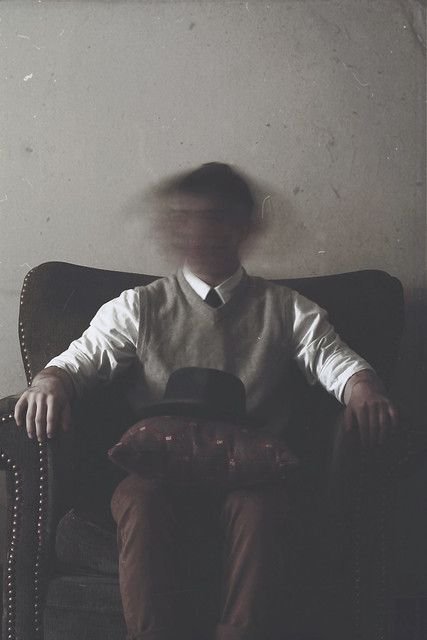
A thought occurring inside you is not, by itself, evidence that you consciously chose the belief beneath it.
Sit with that for one full breath before your mind starts building its defense. It will want to because it is proud of its opinions the way a bird is proud of a nest. Never questioning, just building the nest the same way its mother did.
An inherited thought can still arrive dressed as insight. It can feel like you. Wear your syntax, arrive in your own inner voice- and still be a guest. Someone who moved in so long ago, you’ve started paying its rent, without any conscious effort.
The Parliament Inside Your Skull
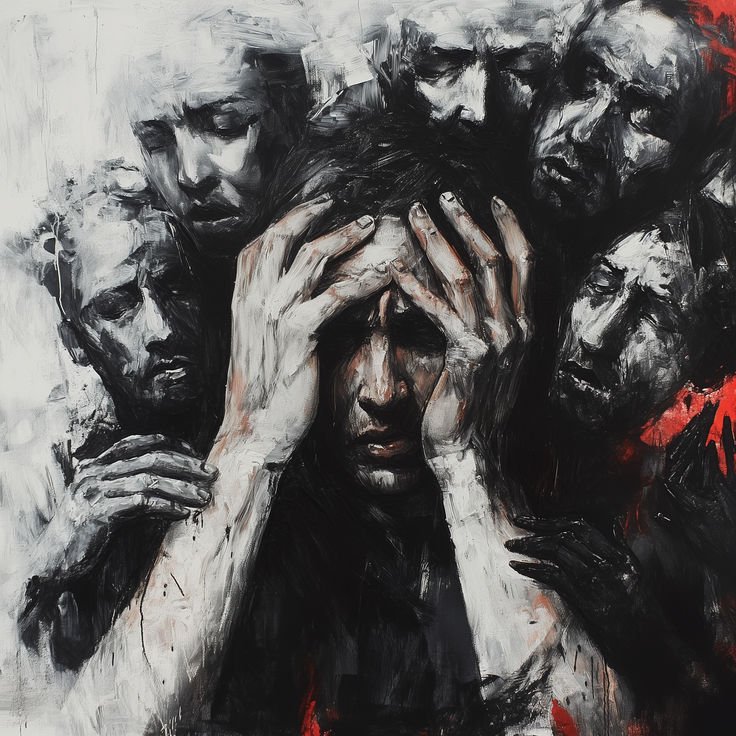
Open the door to the crowd of voices within. Not haunted, but governed. A parliament whose members took their seats before you were old enough to vote on the matter, some of them unopposed ever since.
Your mother repeated a sentence so many times that eventually it stopped sounding like her and began sounding like you. A worldview absorbed in a fluorescent classroom may have been filed under fact before you ever examined how the conclusion was reached. Morals arrive through culture. Fears rename themselves “common sense” and quietly begin voting on your choices.
Even aesthetic preferences can carry fingerprints: a taste borrowed from someone you admired may eventually feel self-evidently yours.
And then there is the opinion you have repeated so many times, in so many rooms, that repetition did what repetition does to a stone in a river. Wore it smooth, wore it round. Until it looks less like an argument you once believed and more like a fact about your personality.
None of them arrived with a note explaining themselves. They rarely do. Inheritance prefers to stay quiet like that; it prefers people to mistake it for identity.
What You Won’t Find Here
Here is the prettier ending I could give you: “Strip away every borrowed layer and somewhere beneath the conditioning you will discover the uncontaminated self, gleaming patiently beneath everything the world put there.”
I would love to hand you that ending. It’s tidy. Easy to photograph. Easy to understand, but it’s self-flattery dressed as spiritual excavation.
Imagine deleting every belief you’ve ever acquired from others. What would truly remain?
We do not mine human beings; we weave them. Language, values, stories, categories, customs, fears, loyalties, and ways of interpreting experience all reach us partly through other people. Even rebellion usually begins in relationship to something already given.
The relational part of this argument finds an interesting echo in Ubuntu philosophy and the Nguni saying umuntu ngumuntu ngabantu, often rendered as “a person is a person through other persons.” Ubuntu carries meanings far richer than the narrow question of inherited belief, but its relational view of personhood unsettles the fantasy that a self is formed entirely alone. We become ourselves in contact with others.
So the useful question is not simply, “Did this belief come from somewhere else?” Many of our beliefs are shaped in relationship. The harder RUIA question is this:
What inherited beliefs have survived conscious examination? What have become genuinely chosen convictions? Which are simply still running on the authority of never having been questioned?
That distinction is the entire gateway. Not purge. Audit.
Mystics Sat With This Exact Vertigo
Long before witness-consciousness had a hashtag, the Punjabi Sufi poet Bulleh Shah wrote Bulleya, ki jaana main kaun, often translated as “Bulleya, who knows who I am?” The poem moves through negation after negation: not this identity, not that affiliation, not one substance, not another.
I read that refusal not as a tidy discovery of some polished “authentic self” underneath, but as a willingness to remain inside the question after familiar labels stop answering it. Identity loses garment after garment, and the poem refuses to reward us with an easy costume underneath.
If Bulleh Shah can spend a poem’s worth of breath un-choosing familiar names, you can survive a blog post doing the same over coffee. And once you have recognized the parliament as a parliament rather than mistaken it for a monarchy of one, Faiz Ahmed Faiz offers a very different instruction: “Speak, for your lips are free.”
Not: wait until your voice has become perfectly uncontaminated. Speak while history, language, inheritance, resistance, and choice are still mingled in the mouth. Waiting for a completely self-authored voice may mean never speaking at all.
The Unconscious Keeps The Receipts
Depth psychology approaches a neighboring problem through a very different vocabulary. Jung repeatedly returned to the influence of what remains outside conscious recognition. In Aion, he writes that when an inner situation is not made conscious, it can appear outwardly as fate.
That is not the same claim Bulleh Shah makes, nor the same one Faiz makes, and none of them is a theory of inherited beliefs in the RUIA sense. I place them beside one another because each, in a different register, disturbs the fantasy that the conscious voice is always the sole author of what moves us.
For RUIA, that is enough. Awareness is not the destination. It is the moment you finally ask to see the receipts.
‘If I removed every belief that I learned to belong, what would remain?’
Don’t answer it today. Sit with the question beside Bulleh Shah’s refusals and Faiz’s insistence on speech. Let it sit in the room with the rest of the parliament. Watch how nervous certain members suddenly become.
Your Mental Awareness Practice: Open the Parliament
You have just read what it looks like to stop mistaking inherited beliefs for original thought. This is your invitation to begin telling them apart.
This Week’s Practice
Choose one moment today, not a designated journaling session, just an ordinary moment when an opinion, judgment, or reflexive thought arrives with the familiarity of second nature.
Set a timer for five minutes.
Close your eyes if that feels useful, or simply go still.
Do not try to argue with the thought.
Don’t replace it with a better one.
Then ask, and this is harder than it sounds: where did this thought learn to speak like that?
Not what it means.
Where it’s from.
The register it’s using. Is it a command, a warning, a taste, a fact?
The voice underneath the voice. Does it resemble anyone in particular?
A parent’s sentence. A teacher’s rule. A fear that renamed itself common sense. A room full of people you were once trying not to disappoint.
Stay there.
When your mind starts building its defense – but this one’s true, this one’s mine – note it.
Then return to the thought. Return to the question of its origin.
At the end of five minutes, write one sentence – just one – about what you noticed.
Not whether the thought was right.
Or whose voice it was in.
If the same voice turns up more than once this week, don’t rush to a verdict on it yet. That’s not failure to conclude – that’s the recurring evidence Awareness is actually built to notice. Regulating it belongs to a later stage. Here, within Awareness, the Mind Gateway asks only that you learn the thought’s accent.
A Question To Sit With
“If this thought has been speaking in my own voice all along, whose sentence was it before it became mine?”
You are not trying to evict the parliament in one sitting.
Awareness asks only that you notice it’s a parliament, and not a monarchy of one.
Seeing that is the first and most difficult act of all.
Questions at the Threshold
Dive Deeper Into The House
☁︎ Who Am I? An answer in spirituality and mysticism.