Best Read: After a busy day at work.
The Marrow (Synopsis)
Modern spirituality often mistakes emotional intensity, coincidences, and personal desires for divine signs. True spiritual discernment requires examining intense experiences before accepting them as meaningful interpretations. Discernment serves as a necessary bridge between mind and soul. It prevents subjective projections from being mislabeled as divine guidance or intuition.
Many historical & psychological traditions stress that we should distrust our immediate interpretations of inner experiences. Genuine spiritual discernment evaluates where a feeling leads. Whether it fosters humility and capacity for love comes second. Rather than acting blindly on intense emotions, we must question our true motivations.
Not everything is a sign. It must pass through the door of spiritual discernment first. Sit with that for a second. Let it be as uncomfortable as it wants to be.
The song that arrives exactly when you needed permission to cry. The clock catching 11:11 more nights than chance should reasonably allow. The stranger whose eyes did something to your sternum on a Tuesday you’ll now always remember. Somewhere between coincidence and cosmology, a decision is made without your consent. Need or want wearing a cosmos sign’s clothing.
‘Spiritual Discernment’ and its true meaning are missing in many modern practices. Most contemporary spirituality never asks the question. It answers it simply and always in the same direction. Every repeating number is angelic correspondence. Any subtle wave of emotion is your higher self texting. Any man who reactivates your abandonment wound is a “soul contract”. He is never simply a man with familiar damage and good cheekbones.
The universe, in this way, is a customer service line that exists solely to confirm your plans, flatter your timing, and never once say no.
That’s not reverence. It’s projection with a candle beside it.
“Prove all things; hold fast that which is good.” – Thessalonians 5:21
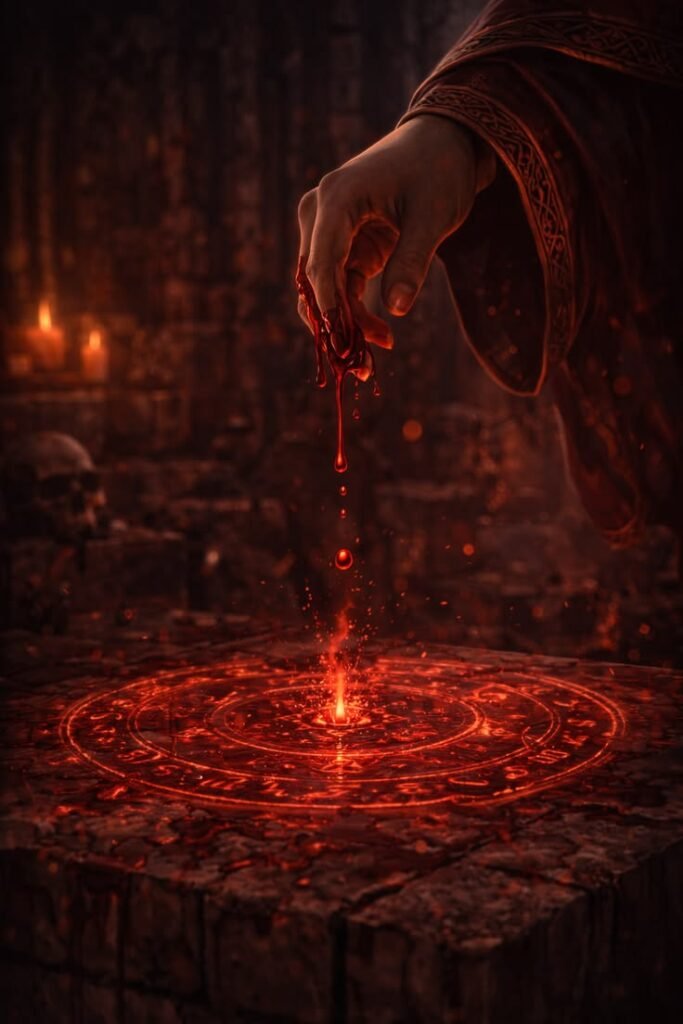
When Every Sensation Becomes A Sermon
The same internet that taught a generation to distrust their government, doctors, exes, and the news will still encourage them to trust feelings that come with coincidence. Numbness is suspect. Certainty is sacred. If it’s intense, it’s real. And then if it’s real, it’s meant to be. And if it’s meant to be, it’s yours to obey.
That is not intuition. That is outsourcing discernment to your nervous system and calling the transaction holy.
I built this space on the idea that mystery is real. The seen world sits inside a larger, unseen one. That direct experience of it is available to anyone willing to sit still long enough to be undone by it. I still believe that fully. Which is exactly why I refuse to let it get cheapened into a horoscope app. It only ever tells you what you already wanted to hear. Mystery deserves reverence precisely because we shouldn’t counterfeit it.
What Spiritual Discernment Actually Asks of Us
The mind pillar within the RUIA curriculum asks you a blunt question. ‘Can you refine the lens through which you see reality?’ Not every thought in your head deserves your allegiance. Most are noise; inherited, borrowed, or fear in a clever disguise. The whole discipline of being discerning is learning to catch a thought mid-air and ask what it’s made of, especially before you let it steer you.
Spiritual discernment happens when you turn that scrutiny on something that feels sacred. Because here’s the harder truth underneath the first one:
Not every meaningful experience deserves a mystical interpretation.
That sentence is where a philosophy starts to have a spine. It’s the bridge between the mind and soul. Between learning to question a thought and learning to question a revelation.
The traditions that took the unseen world most seriously were, without exception, the ones most suspicious of how eagerly the seeker interprets it.
Four Traditions, Not One Smoothie
It’s tempting to blend every mystical lineage into a single reassuring paste. Ancient wisdom says trust your heart and sell that as depth. It isn’t depth. It’s laziness wearing a kaftan (poncho).
What’s actually there, if you look closely, is four diverse diagnostic systems. Built centuries apart, they arrived independently at the same suspicion. “The seeker is the least reliable narrator of their own experience.”

Ignatius of Loyola
Ignatius of Loyola spent his convalescence noticing something inconvenient. That daydreams of glory and daydreams of God both felt wonderful in the moment, but only diverged later, in their aftertaste.
Out of that noticing came his rules for the discernment of spirits. The practice of tracking not how intensely a movement of the soul arrives, but where it’s walking you towards.
A feeling that leaves you more loving, patient, capable of staying in the room during difficulty. That’s worth following.
A feeling that flatters you, isolates you, or asks you to abandon a commitment made in a clearer hour… that gets the mystical interpretation revoked, however holy it felt going down.
The Ignatian tradition never asks: Did this feel like God? Everything feels like God to the person who wants it to. It asks what the feeling is doing to your capacity to love the people in front of you.
Sufi Mysticism
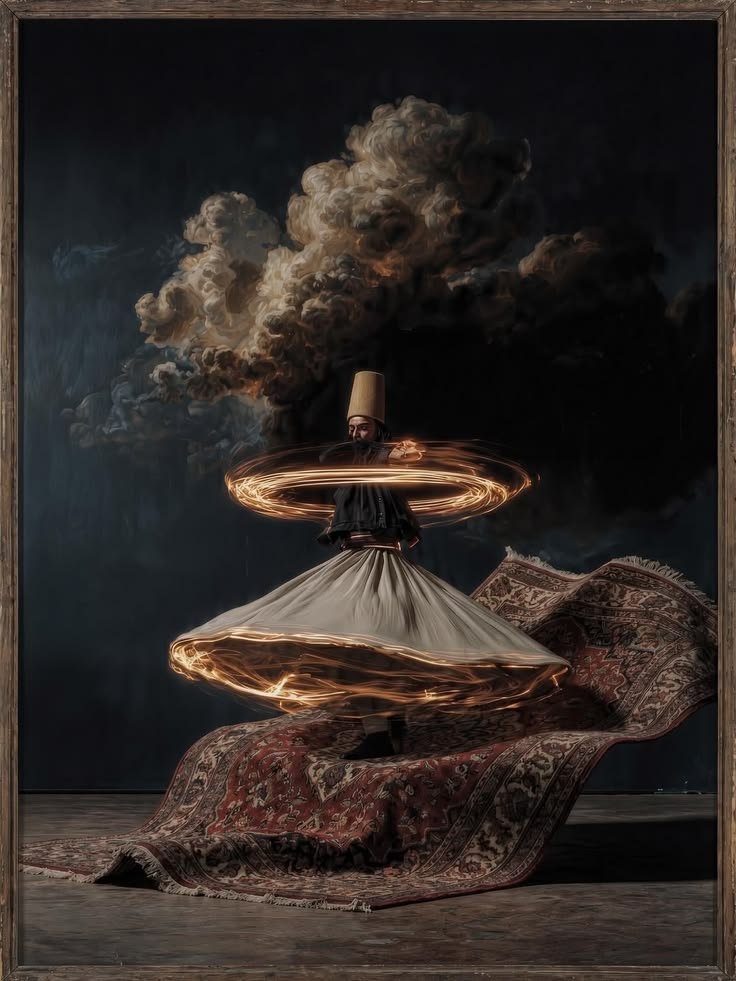
Sufi psychology maps the nafs- the self- across stages. From the one that simply wants to the one that’s finally at rest. The dangerous stage isn’t the first one, where the ego is crude and obviously self-serving. It’s the third, the inspired self, where the seeker starts receiving genuine flashes of insight. It is also here that they may mistake every single one of them for the ceiling of their development.
Even in the Sant Mat tradition I follow, it is advised not to mistake every turn within as a destination.
Because at that stage, the tradition warns, the enemy has learned to imitate divine inspiration convincingly. The whispers get eloquent. That’s precisely when a person is most at risk of becoming what the tradition bluntly calls a false guide. Not through malice, but through a refusal to keep questioning a voice just because it finally sounds wise.
True spiritual perception, firasa, isn’t a talent you activate. It’s earned through the unglamorous, decades-long work of purifying the heart from resentment, vanity, and appetite.
Discernment is a God-given ray of light which appears in the heart like lightning. But only, the mystics insisted, in a heart that has already done the work of becoming a fit place for it to land.
Vedanta Tradition
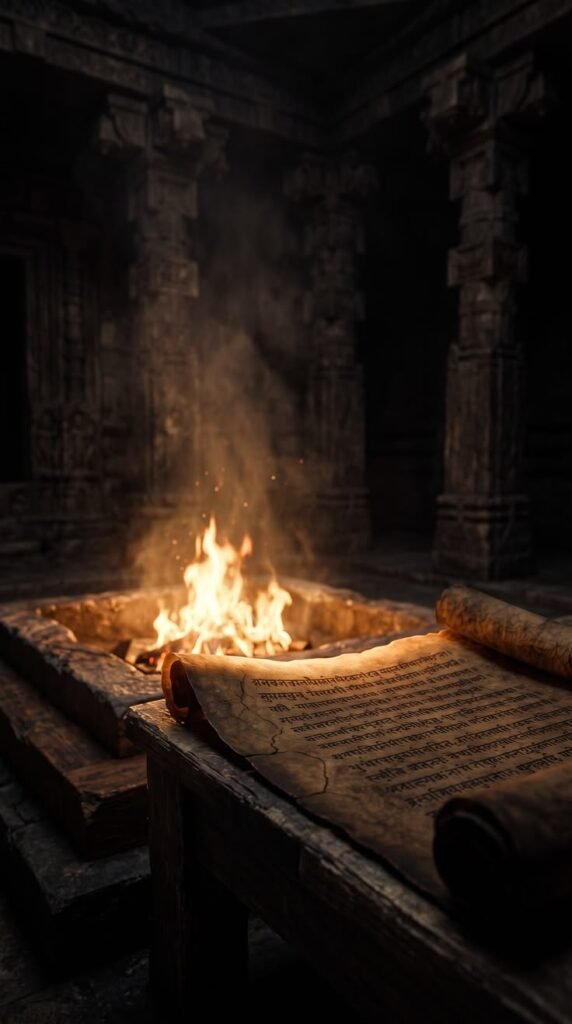
Vedanta doesn’t bother arguing about whether a given sign is real or fake. It goes underneath the question entirely. The practice of viveka, discrimination or discernment, trains the seeker to distinguish the seer from everything seen.
Witnessing awareness from the parade of thoughts, sensations, & emotional weather that passes in front of it. A chill up the spine is content. A wave of tears is content. The sense that this moment is Meaningful, capital M, is also content.
“Neti neti.” Not this, not this. Not the goosebumps, the certainty, the beautiful, private conviction that you’ve finally understood something.
The practice isn’t collecting more signs to prove the Self is real. It’s the relentless subtraction of everything you mistook for the self as stage one. Until what’s left doesn’t need proving at all.
Jungian Psychology
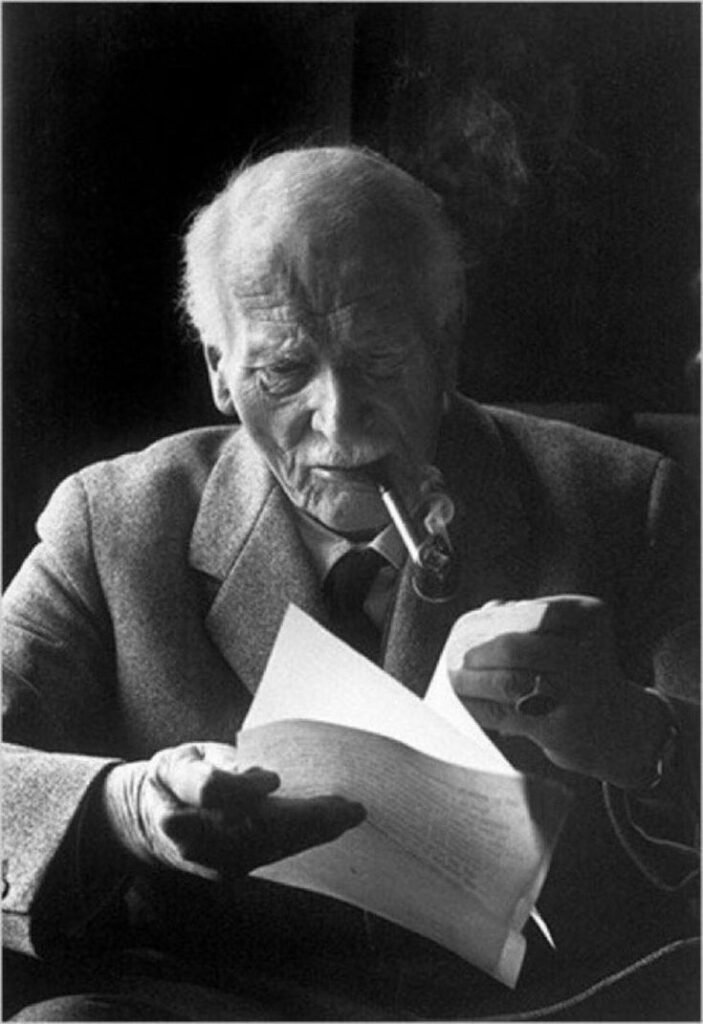
Jung gave the secular West a clinical name for what mystics had been warning about for centuries. The numinosum.
The encounter with something that overwhelms the ego. It feels unmistakably charged with significance. He didn’t deny it was real and instead spent his life studying it. But he was unambiguous about its danger, precisely because of that charge:
“The numinosum is dangerous because it lures men to extremes.”
An intense experience doesn’t announce whether it’s healing or inflating you. Whether you’re integrating a genuine encounter with the unconscious, or simply fusing your fragile ego to an archetype, you may be mistaking the borrowed grandeur for your own.
Jung called this psychological inflation, and it looks identical to awakening. The only honest test is what happens to a person’s humility on the other side of the experience. Inflation leaves you certain, loud, and suddenly very interested in being someone’s guru. Real contact with the numinous tends to leave you smaller and more careful. The feeling of sublimity.
Notice what these four have in common, and notice that it isn’t a shared vocabulary. A Jesuit, a Sufi purist, an Advaitin renunciate, and a Swiss psychiatrist. They were not reading each other’s mail; instead, what they share is a posture. Profound respect for the unseen, paired with profound distrust of the seeker’s first read. None of them treat intensity as evidence. None of them let the seeker skip the labor of self-examination by pointing at how strongly they felt something.
Sadly, contemporary spirituality inverted this completely. It did it so gradually that most people never noticed the trade. It kept the language of mysticism- signs, synchronicity, alignment, the universe. But quietly dropped the discipline that made those words trustworthy in the first place. What’s left is a vocabulary of reverence attached to a practice of self-confirmation. That’s the real heresy here, if I’m going to use that word at all. Not doubting the mystical, but rather refusing to examine it. Even worse is being oblivious to the art of spiritual discernment entirely.
So what To Do With The Chill Up Your Spine?
Don’t dismiss the feeling. That is the other trap. It’s the one that looks like rigor and is actually fear wearing a lab coat. Instead, true to the liminalist universe we inhabit- there is a middle way.
Sensation is information, not instruction. A chill means something moved in you. However, it does not, on its own, mean leave your job, or he’s the one, or permission to say, ‘I am being called to lead others.’ Pay attention first. And then go do the slower work.
Let the Ignatian question of where this leads you or who it’s transforming you into find its answer. Draw inspiration from the Sufis by questioning whether your own heart is currently pure enough to trust its own instincts. Alternatively, consider the broader question posed by Vedanta, which asks, “Who is the one being moved, in the first place?” Or simply, explore the Jungian question of whether you’re integrating this experience or being consumed by its foundational principles.
Ask all four questions, honestly, before you let a feeling redesign your life. Most signs survive maybe one of them. The real ones tend to survive all four- quietly, without needing you to defend them to anyone.
What Anchors You When The Signs Run Out
The liminalist way of life doesn’t ask you to believe in just anything. It asks what anchors your existence when external identities fall away. A sign you constructed to flatter your own longing was never going to be sturdy enough to anchor anything. It was never load-bearing. Someone mistook the decoration for a foundation.
‘Bulleya, ki jaana main kaun – (Bulleh, I don’t even know who I am.).’ The Punjabi Sufi who wrote that wasn’t having a breakdown. He was doing the actual work. The same work every tradition above eventually arrives at, however different the road. Not collecting proof of a self worth performing. Subtract the performance until something quieter and truer stands.
Mystery deserves reverence precisely because we shouldn’t counterfeit it. Not every thought deserves your allegiance. Not every feeling deserves a myth. And the parts of you that are actually eternal were never going to need a coincidence to prove it.
Questions At The Threshold
Remain In The House
☂︎ Discernment is not the end of mystery. It is how we learn to meet mystery without immediately turning it into a mirror. If this essay has made you wonder where projection, inheritance, intuition, fear, and genuine knowing are tangled together in your own life, begin with the Threshold Self-Audit.
☂︎ For more writing on mysticism, spiritual practice, symbols, and the unseen: → Enter Spirituality & Mysticism.